

If you have ever run a hot foil stamping job and watched a batch of perfectly printed sheets come out with patchy, incomplete foil transfer—or worse, blurry edges that make your luxury packaging look anything but premium—you already know the frustration.
Chances are, the issue was temperature. Not pressure, not speed, not the foil itself. Temperature.
Temperature control is the single most critical variable in hot foil stamping. Get it wrong, and you are throwing away material, time, and customer trust. Get it right, and your automatic foil stamping die cutting machine delivers consistent, high-quality results run after run.
Why Temperature Control Matters More Than You Think
Heat activates the adhesive layer on the foil and allows it to bond to the surface of your paper or board. That is the basic principle. The problem is that the window between “too cold” and “too hot” is surprisingly narrow.
Run your automatic foil stamping die cutting machine at too low a temperature, and the adhesive does not activate properly. The result? Foil that refuses to stick across the entire area, or foil that peels off after stamping. You end up with patchy, incomplete designs that are immediately obvious to anyone who picks up the finished piece.
Run it too hot, and a different set of problems emerge. Excessive heat liquefies the foil's adhesive layer, causing it to bleed beyond the boundaries of your die. This creates blurry edges, a halo effect around the stamped image, and in severe cases, substrate distortion or scorching. On delicate materials, you risk permanent damage.
A deviation of more than 10°C from the optimal temperature window is enough to cause oxidation, gloss loss, or incomplete transfer. That is not a massive margin for error in a production environment where conditions fluctuate throughout the day.
What Temperature Inconsistency Actually Looks Like on Your Line
The tricky thing about temperature-related defects is that they do not always announce themselves loudly. Here is what to watch for:
Poor adhesion or patchy stamping often points to temperature that is too low. The foil might look acceptable at first glance, but it will not hold up to handling or finishing.
Blurred or haloed patterns are classic symptoms of overheating. The adhesive becomes too fluid and flows where it should not. You lose the crispness that makes foil stamping valuable in the first place.
Inconsistent results across the sheet—some areas stamp cleanly while others look weak or overdone—usually indicate uneven temperature distribution across the heating plate. This is one of the most common frustrations with older or poorly designed equipment.
Burnt marks or scorching on the substrate mean your temperature is set far too high. This is not just a cosmetic issue—it is a waste of expensive material.
The Engineering Solution: Multi-Zone Independent Temperature Control
This is where the design of your automatic foil stamping die cutting machine makes a real difference.
A heating plate with a single temperature sensor might sound adequate in theory, but in practice, it cannot compensate for heat loss at the edges or hot spots in the center. The result is uneven temperature distribution across the stamping area, which means inconsistent quality from one part of the sheet to another.
Modern automatic foil stamping die cutting machines address this with independently controlled heating zones. A system with 12 zones—each with its own sensor and control—allows operators to fine-tune temperature across the entire plate. The heating wire arrangement is tight enough to minimize gaps, and each zone can be adjusted individually through the control panel.
The difference is measurable. With a precision of ±1°C across the heating plate, you eliminate the temperature variation that causes inconsistent foil transfer. The machine maintains stable heat distribution from the first sheet to the thousandth, regardless of fluctuations in ambient conditions or production speed.
Some systems also offer programmable features like timed heating by week, minute-adjustment of each zone, and automatic thermal insulation when the machine is idle. These are not luxury add-ons—they are practical tools that reduce waste and protect your equipment.
What This Means for Your Daily Operation
Good temperature control does more than prevent defects. It changes how you run your shop.
Less scrap. When every sheet comes out consistent, you are not pulling rejects off the line. That is material saved, time saved, and customer satisfaction preserved.
Faster setup. With independent zone control, you can dial in the right temperature profile for each job without guesswork. No more running test sheets until you get lucky.
Greater flexibility. Different foils and substrates require different temperatures. A machine that lets you adjust precisely across the plate gives you the freedom to take on a wider range of work without compromising quality.
Lower maintenance. Stable temperature control reduces thermal stress on components. Equipment that is not constantly overheating or cycling through extreme temperature swings lasts longer.
Choosing the Right Automatic Foil Stamping Die Cutting Machine for Your Needs
When you evaluate an automatic foil stamping die cutting machine, look beyond the headline speed and pressure figures. Ask about the temperature control system.
How many independently controlled zones does it have? What is the temperature tolerance? Can you adjust zones individually through the control panel, or do you have to compromise on settings across the whole plate?
These questions matter because temperature control is not a feature you can add later. It is built into the machine's engineering. A machine with proper multi-zone heating will deliver consistent quality shift after shift. One without it will keep you guessing—and scrapping.
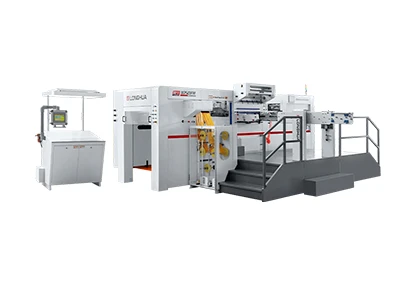
The automatic foil stamping die cutting machines in Longhua's FH series, for example, are equipped with 12 independent temperature zones that control the heating system accurately and keep the heating process stable. This is not about chasing a spec sheet number—it is about giving operators the control they need to produce consistent, high-quality work without constant intervention.
Summary
Temperature control is not the most glamorous topic in foil stamping. But it is the one that separates machines that deliver consistent quality from machines that frustrate operators and waste material.
Here is what to take away:
- Temperature that is too low causes poor adhesion and patchy transfer
- Temperature that is too high causes blurry edges, halo effects, and substrate damage
- A deviation of more than 10°C from the optimal range is enough to cause defects
- Multi-zone independent temperature control with ±1°C precision eliminates the variation that causes inconsistent results
- The right automatic foil stamping die cutting machine gives you the control to run different foils and substrates with confidence
Ready to Stop Guessing and Start Producing Consistent Quality?
Whether you are upgrading your existing line or specifying equipment for a new facility, the temperature control system on your automatic foil stamping die cutting machine deserves close attention.
Our team can help you understand the specifications that matter for your specific production mix—paper types, foil varieties, typical run lengths, and quality standards. No pressure, just practical advice from people who have been building these machines for over 20 years.

